
I promise, I’ll try to keep this interesting…
Kinda cliche, but I’ll be talking about the flowers since I was personally intrigued by their symbolism and wanted to look into it a bit myself.
Real quick, it isn’t too clear whether Ophelia is presenting these flowers to Claudius or Laertes, but I’ve found their meanings can actually be applied to both of them in almost every case. Also I’ll be showing pictures of the flowers since personally I didn’t know what fennel or rue looked like. Anyway, shall we?
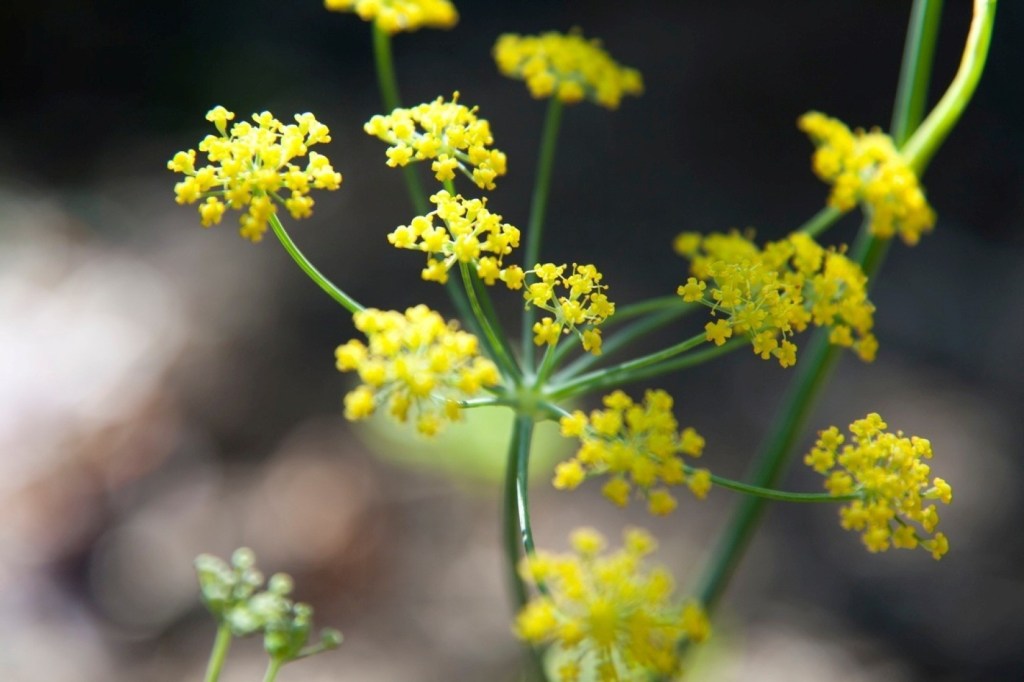
Fennel symbolizes flattery and adultery, both of which are actions that require a certain level of deception. Ophelia presenting this flower to these two could be seen as a form of foreshadowing, as Claudius and Laertes scheme how to kill Hamlet through sly and secretive means in the very next seen, and plan to give Laertes a sharp and poisoned blade without anyone knowing, while Hamlet would be given a blunt sword. Rather ironic when they are seeking to avenge Mr. “To thine own-self be true”…

Incredibly beautiful flower that one… anyway, columbines can represent foolishness, which once again could be foreshadowing that Claudius’ and Laertes’ plot may have several holes in it and may indeed be foolish (I’d have to spoil some stuff to provide evidence, but hint Hamlet hasn’t been fooled in the past so it’s incredibly unlikely that he’ll end up being fooled by a pervert uncle and some Alabaman sister kissin’ hick)
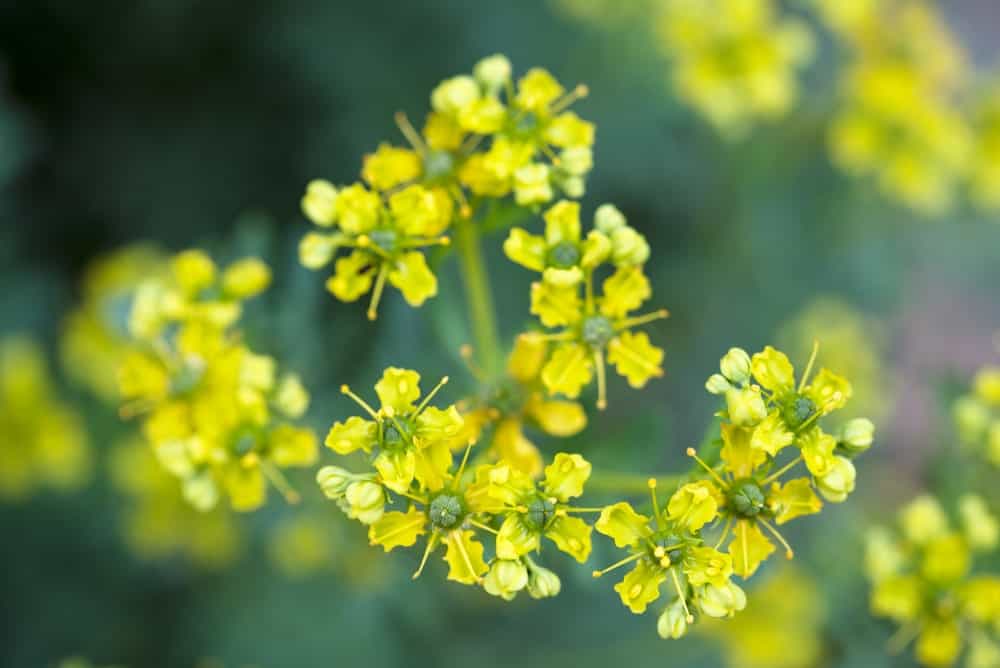
Rue symbolizes both everlasting suffering and genuine repentance, with both meanings applying mostly to Ophelia and Claudius. With Ophelia giving herself rue, it can display her immense grief for her father, knowing she will never be able to overcome her grief of him. This seemed to be true, as Ophelia was “incapable of her own distress” (iv. vii. line 203) and likely killed herself by letting herself fall into the water because she couldn’t handle her personal grief. However, for Claudius, the rue could mean that he is continually suffering from the guilt that he feels for murdering his brother as he searches for a means of repentance. Ophelia mentioning that rue is “the herb of grace o’ Sundays” could be alluding to the scene where Claudius was attempting to repent in the confessional, as Sundays are often associated with going to church.

Alright, daisies often represent innocence and purity, but also symbolize child birth and motherhood. This could be another hint at Ophelia being pregnant with Hamlet’s baby, as many of us have hypothesized after her whole song “let in a maid, that out a maid never departed more” that suggested Ophelia isn’t a virgin, along with several other possible indications of pregnancy… *cough* get thee to a nunnery to have yo’ baby *cough*…
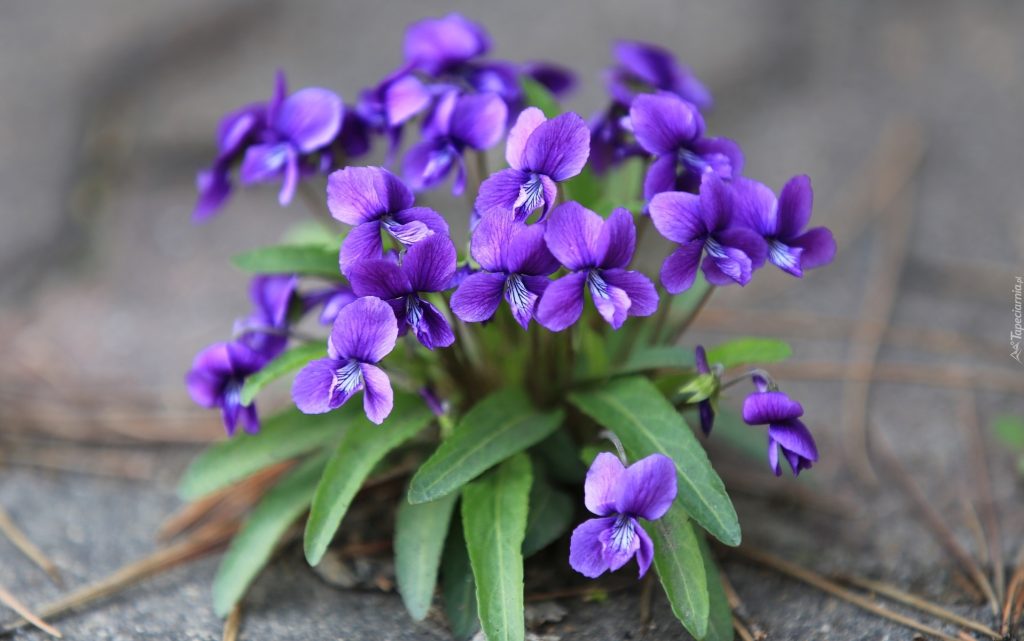
Last but not least, Violets. Violets often symbolize faithfulness and loyalty, however Ophelia stating that she has no violets after her father died suggests that she feels like she can’t trust anyone and is utterly hopeless. I mean her boyfriend did just go full on Caesar on her father so you can’t really blame her for feeling slightly betrayed.
Well, that’s a few paragraphs talking about flowers… anyway, cheers!
 Dawn and Dusk
This post has an excellent balance of nuanced, well-thought-out commentary and amazing (and often hilarious) use of voice. This is so well written! I appreciate your pictures and loved the reference to Laertes as “some Alabaman sister kissin’ hick.” I didn’t think about the fact that Ophelia could be giving the flowers to either man in this scene, but I agree that it could work for both of them depending on the context. Nicely done!
LikeLiked by 1 person
I did the flowers, too! I didn’t think of giving the flowers between Claudius and Laertes, but of her describing her relationship issues with Hamlet. Your analysis was very thorough and quite comedic with the “Alabaman sister kiss in’ hick.” I did not think about how fennel could relate to the scheme Laertes and Claudius was planning. Cool stuff!
LikeLiked by 1 person
This is super well researched! It was really helpful and interesting to have all the symbolism in one place and how the flowers relate to characters. One thing I also noticed about the symbolism of the violets is that since they represent faithfulness and loyalty, Ophelia’s statement that they withered when her father died could be tying back into Polonius’ hypocritical advice of ‘to thine own self be true.’ Great job!
LikeLiked by 1 person
I actually LOLed at your title and then again at “Mr.’To Thine Own…'” I also appreciate how you provided images of the flowers. Also, your tone is so hilarious and fresh–though I also wanted to see genuine practice of formal evidence/commentary in an argument–but it is so funny. Like seriously Hamlet had to “go full on Caesar on her father.” Rue was also often used as an abortifacient which is interesting with Ophelia’s pregnancy theory.
LikeLiked by 1 person
You always write with such a well developed and hilarious voice!! I also really appreciated the pictures too because I’m not quite a floral expert! Nice analysis, Daniel.
LikeLiked by 1 person